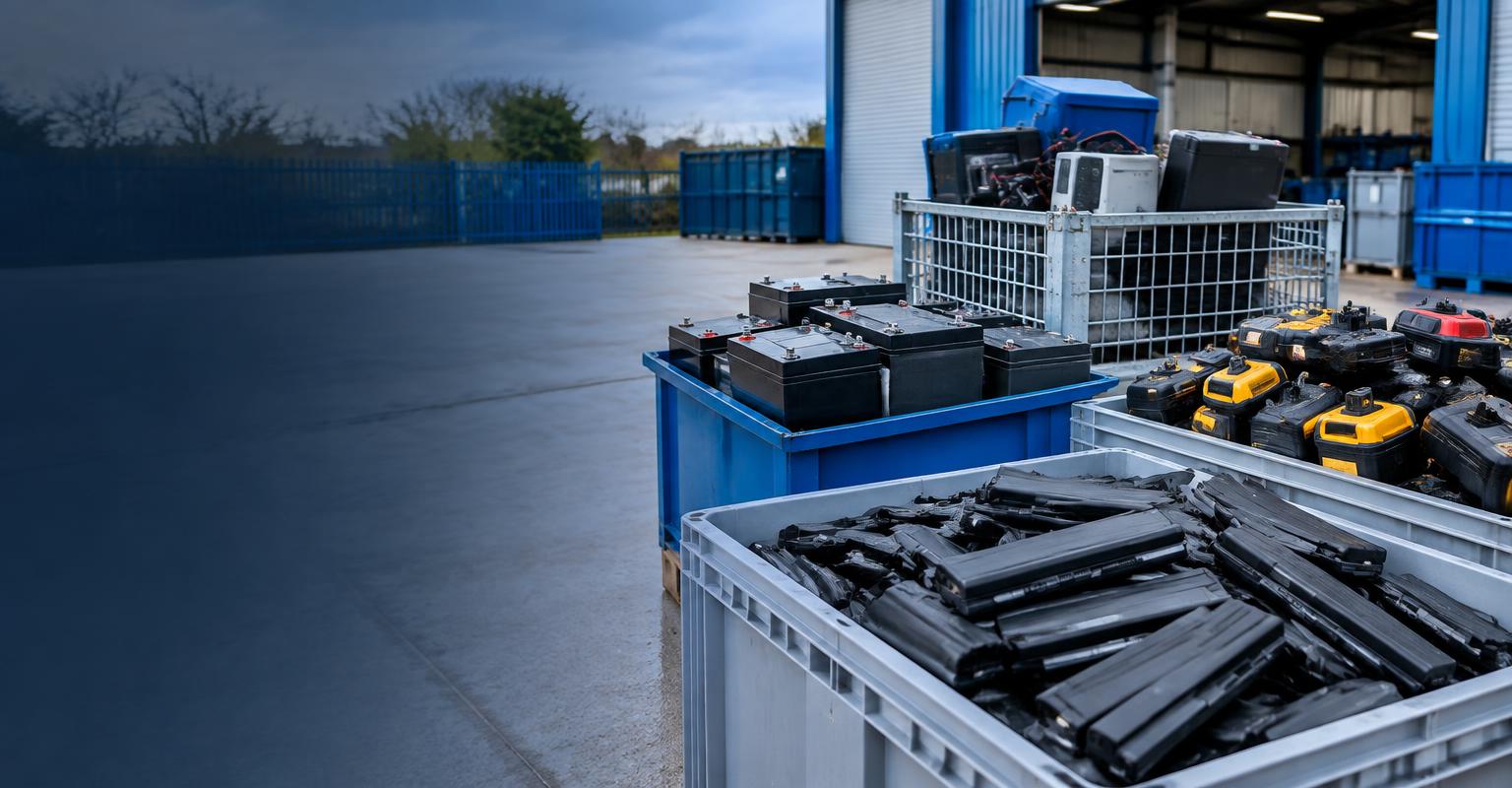
Battery Recycling
Discuss business battery waste and equipment containing batteries with our team.
Request a collection quoteBattery recycling collections for organisations
Our battery recycling service covers business battery waste, including standalone cells, battery packs and batteries remaining within electrical equipment. Loads can contain lithium-ion, nickel-metal hydride, lead-acid or alkaline batteries in different formats and conditions. Tell us the chemistry where known, approximate quantities or weight, and whether any units are damaged, swollen or leaking so our team can discuss the collection requirements for the actual load.
Business battery loads can contain different chemistries, formats and conditions. Accurate identification is important whether batteries are loose or remain inside electrical equipment.
Examples for collection
This list is not exhaustive. Tell us about other electrical items in the same load and our team can review them together.
- Li-ion batteriesRechargeable packs from equipment, tools and battery storage units.
- NiMH batteriesRechargeable cells withdrawn from devices and older equipment.
- Lead-acid batteriesSlated and sealed batteries from standby power, vehicles and emergency systems.
- Alkaline cellsPrimary cells collected from offices, stores and maintenance areas.
Identify batteries before collection
List battery chemistries
Share labels or photographs for lithium-ion, lead-acid, nickel-metal hydride, alkaline and other batteries.
Describe condition and format
Flag swollen, damaged, leaking or exposed units and distinguish loose cells from batteries inside equipment.
Review packing and quantity
Give weights, counts and container details so the proposed battery load can be assessed.
Recycling routes depend on battery chemistry
We arrange onward recycling and treatment based on the electrical waste being collected and your location.
Battery chemistry, construction and condition determine the appropriate handling and recovery route. Our team needs battery types, approximate quantities and known condition details before discussing a quote or collection.
The importance of recycling batteries
Batteries contain metals and chemical compounds that are both valuable and potentially harmful if discarded incorrectly. Recycling business batteries recovers materials such as lithium, lead and nickel and prevents contamination and fire risks in general waste.
Discuss your battery recycling requirements
Tell us what needs collecting from your business. Our team will review the equipment, quantities and location before discussing collection arrangements.
Battery Recycling FAQs
Which battery types can be collected?
Lithium-ion, lead-acid, nickel-based and alkaline batteries can be included. List each type and approximate weight separately.
How should damaged batteries be handled?
Isolate swollen, leaking or damaged batteries from others and tell our team, as they need more careful handling.
Should battery terminals be taped?
Yes. Taping terminals or bagging batteries individually helps prevent short circuits during storage and transport.