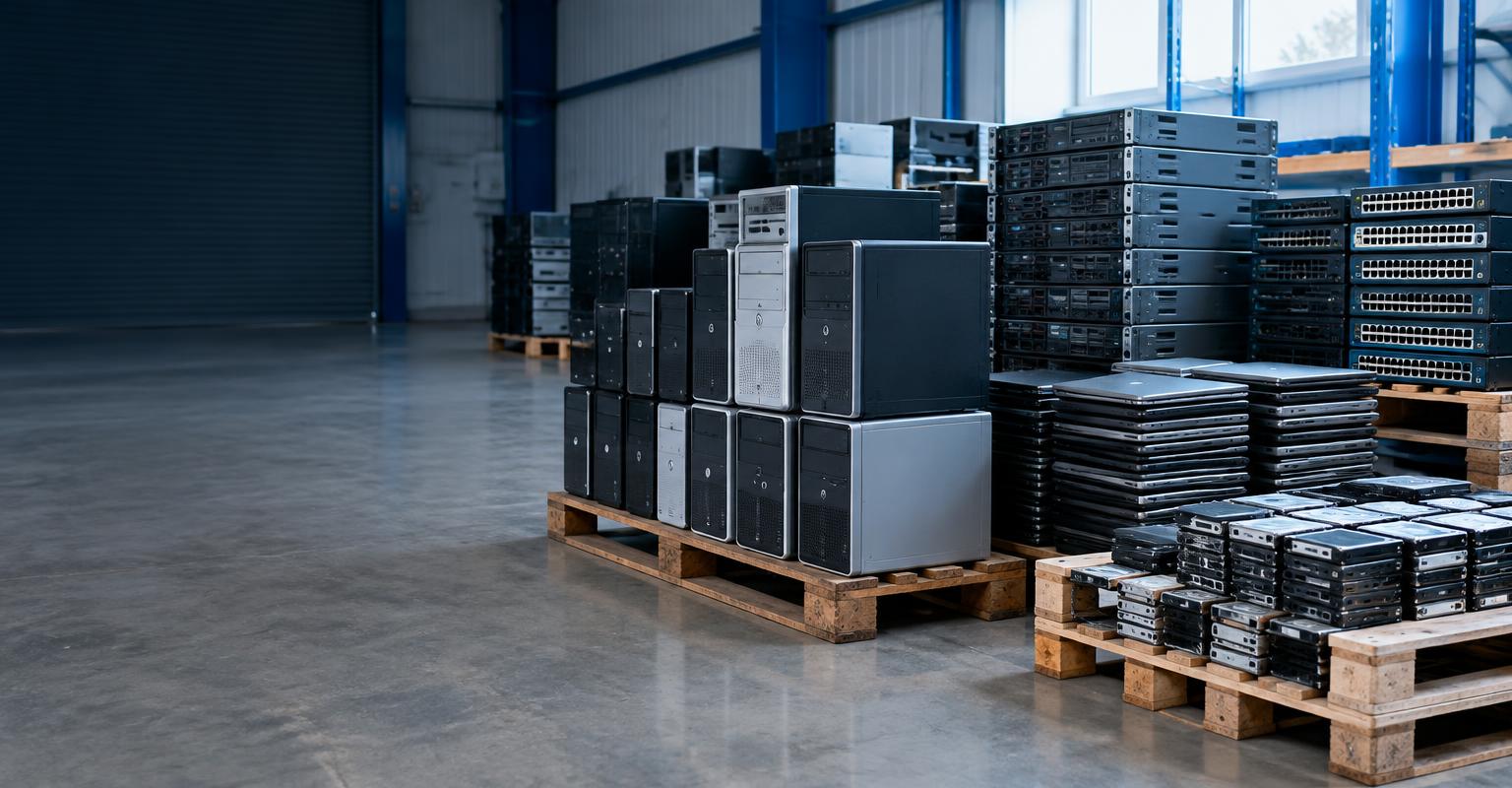
How WEEE statistics are produced
UK WEEE figures come from data reported under the WEEE Regulations. Producers report the amount of electrical equipment they place on the market, and the amount of WEEE collected, treated and recovered is reported through the compliance system. Government then publishes these figures by category.
Placed on the market versus collected
The two headline figures measure different things. Equipment placed on the market is new EEE sold into the UK in a given year. WEEE collected is waste equipment gathered through collection routes in the same period. Because equipment lasts for years, the amount collected in one year reflects products sold much earlier, so the two figures are not expected to match.
Figures are reported by category
Statistics are broken down by the WEEE categories, such as IT and telecommunications equipment, display equipment, lighting, cooling appliances and photovoltaic panels. Category figures show which types of equipment make up the largest share by weight. Heavy items such as large appliances and cooling equipment tend to dominate tonnage, even where smaller devices are far more numerous.
Household and non-household WEEE
UK figures separate household WEEE from non-household, or business, WEEE. Business WEEE includes equipment such as office IT, commercial lighting and industrial tools. Because businesses often arrange collections directly, non-household statistics form a distinct part of the national picture.
Weight is the main unit
WEEE statistics are reported in tonnes. Weight makes figures comparable across categories, but it does not show the number of items. A tonne of smartphones represents far more devices than a tonne of fridges, which is worth remembering when comparing categories.
Reading the figures
When looking at a WEEE statistic, it helps to check the reporting period, whether it covers household, non-household or both, and whether it measures equipment placed on the market, waste collected or material recovered. Each tells a different part of the story.
Frequently asked questions
Why does collected WEEE not match equipment sold?
Electrical equipment is used for years before it is discarded, so annual collections reflect products sold in earlier years.
Are WEEE statistics measured by weight?
Yes. UK WEEE figures are reported in tonnes and broken down by category.
Is business WEEE reported separately?
Yes. UK figures distinguish household WEEE from non-household WEEE.
Sources
Discuss your electrical waste
Contact our team to discuss the electrical waste your business needs collected. Have an equipment list and approximate quantities or weights ready, with your collection location and access details.
Contact our teamThis article is for general information only and does not constitute professional or legal advice. Waste producers are legally responsible for correctly classifying their waste. For guidance on your specific electrical waste, please contact our team.