What WEEE means
WEEE is the term used in UK regulations for electrical and electronic equipment that has been discarded. GOV.UK guidance defines electrical and electronic equipment (EEE) as products that depend on electric currents or electromagnetic fields to work properly. Once a business no longer needs that equipment and intends to discard it, it becomes WEEE.
It is not only items with a plug
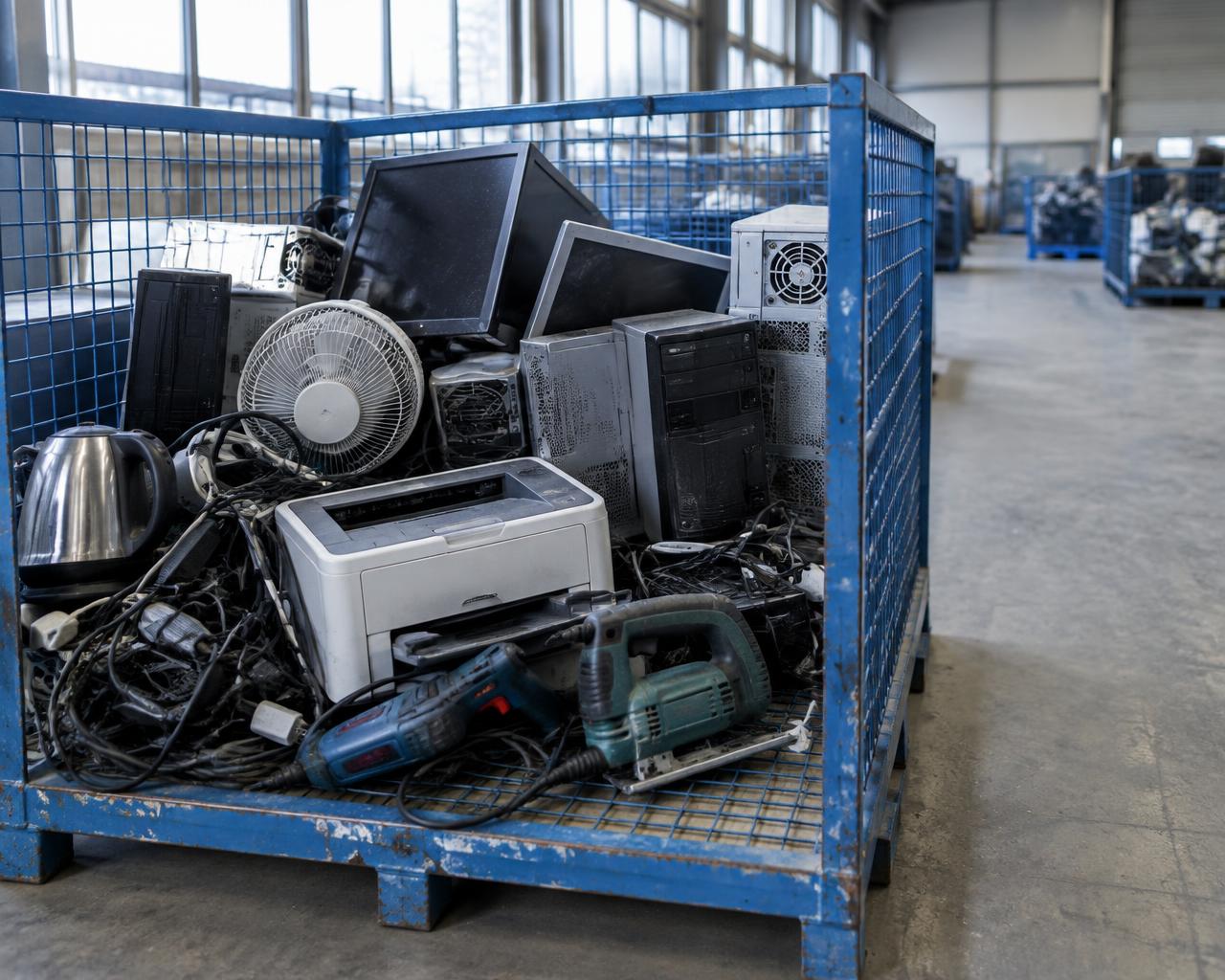
Battery-powered, rechargeable, solar-powered and wind-up products can also be EEE. A cordless drill, a handheld scanner, a wireless headset and a laptop all fall within the definition, as do larger mains-powered items such as photocopiers, vending machines and commercial fridges.
The WEEE categories
GOV.UK groups electrical equipment into categories for reporting purposes. These include large and small household-type appliances, IT and telecommunications equipment, consumer equipment, lighting, electrical and electronic tools, toys and leisure equipment, medical devices, monitoring and control instruments, automatic dispensers, display equipment, cooling appliances, gas discharge lamps and LED light sources, photovoltaic panels and, following the 2025 amendments, vapes.
The categories describe types of equipment. They are a way of organising the products placed on the market and the waste collected, rather than a list of what a single business holds.
Where WEEE comes from in a business
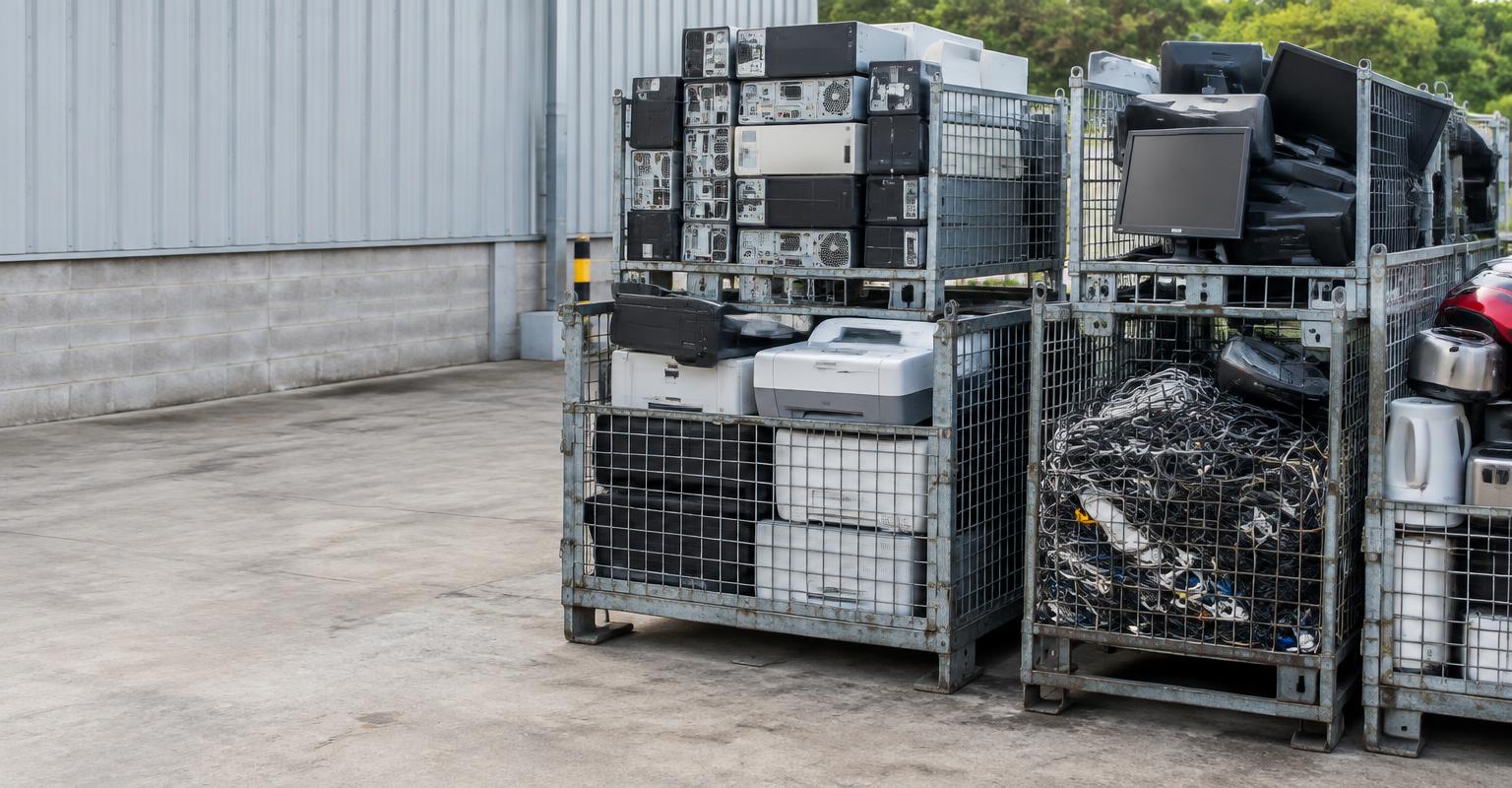
Most organisations produce WEEE without thinking of it as a separate waste stream. Offices replace computers, monitors and printers. Retailers upgrade tills, card terminals and display screens. Schools retire interactive whiteboards and classroom laptops, while facilities teams remove light fittings, hand dryers, kitchen appliances and cabling during refurbishments.
Because electrical items are replaced on different cycles, WEEE tends to build up in storerooms, server cupboards and plant rooms until a refit or office move brings it to light.
Why WEEE is collected separately
Electrical equipment contains a mix of metals, plastics, glass and circuit boards. Collecting it separately from general waste allows those materials to be recovered and keeps electrical items out of landfill. The WEEE Regulations 2013, as amended, set out the framework for collection, treatment, recovery and environmentally sound disposal, alongside measures that encourage reuse and recycling.
Some equipment also contains components that require specific handling at treatment, such as refrigerants in cooling appliances or certain substances in older screens and lamps.
What happens after collection
Collected WEEE is taken to permitted facilities which can operate under T11 waste exemptions, or authorised treatment facilities dependent on the waste stream and the location. Equipment suitable for reuse can be refurbished, while other items are dismantled and processed so that metals, plastics and glass can be recovered as raw materials.
Frequently asked questions
Can battery-powered products be WEEE?
Yes. GOV.UK guidance includes battery-powered products within the definition of EEE, so discarded cordless and rechargeable equipment is WEEE.
Are vapes classed as WEEE?
Yes. GOV.UK guidance includes a separate category for vapes following the 2025 amendments to the WEEE Regulations.
Can different types of WEEE be collected together?
Our team can collect a mixed load of different electrical waste types in a single business collection.
Sources
Discuss your electrical waste
Contact our team to arrange a business WEEE collection. Have a list of items and approximate quantities to hand, together with your collection location and access details.
Contact our teamThis article is for general information only and does not constitute professional or legal advice. Waste producers are legally responsible for correctly classifying their waste. For guidance on your specific electrical waste, please contact our team.